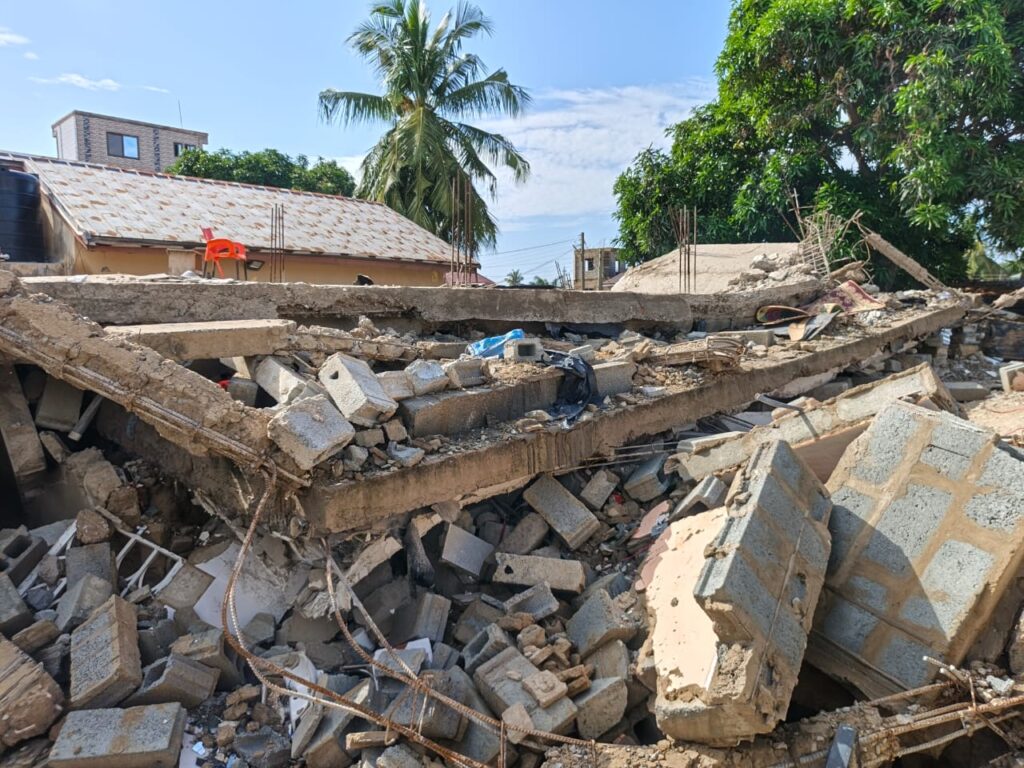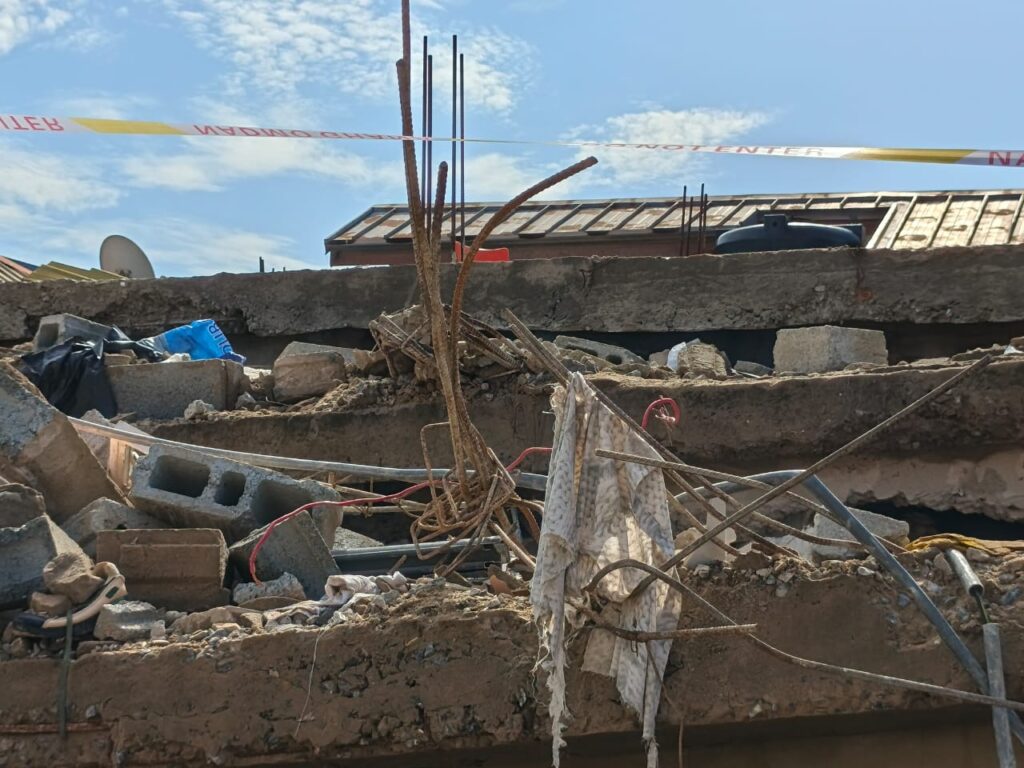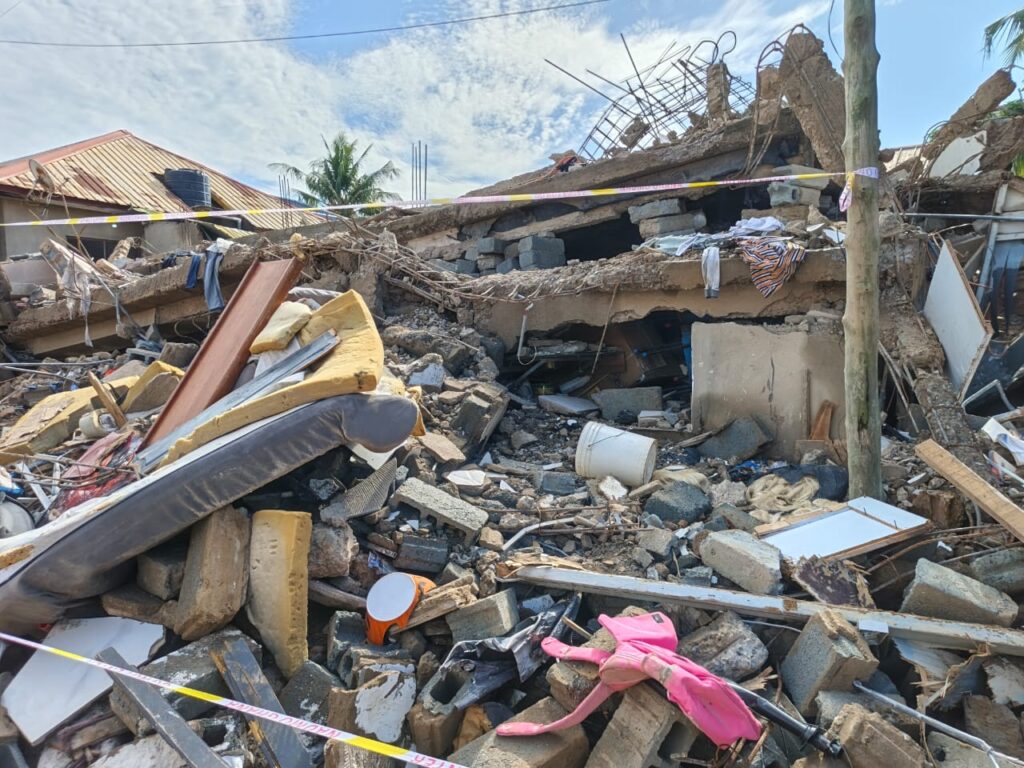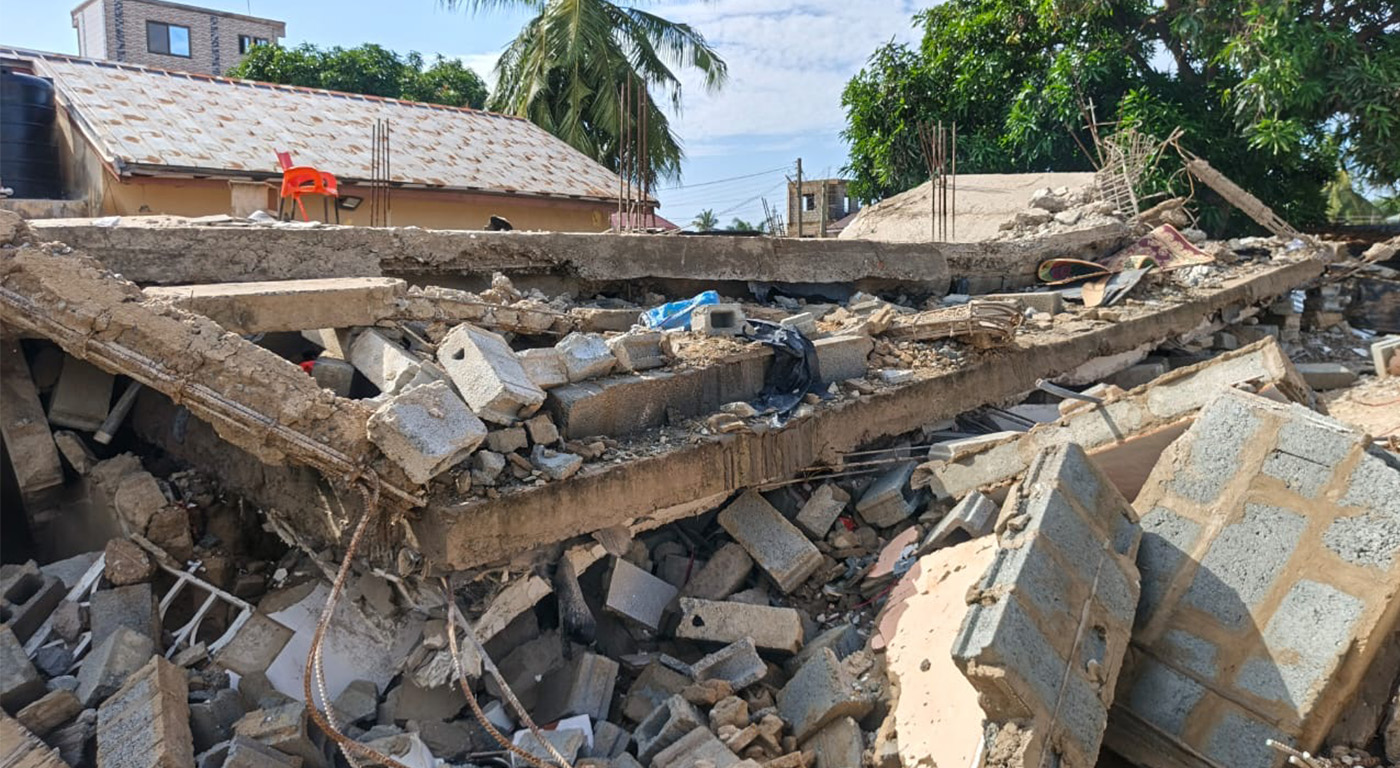

A Joint Technical Investigative Committee comprising experts from the Structural Sub-division of the Ghana Institution of Engineering (GhIE), the Institution of Engineering and Technology, Ghana (IET-Gh), and the Architecture Registration Council (ARC) has released preliminary findings into the recent building collapse at Adenta within the La Nkwantanang Madina Municipal Assembly (LaNMMA).
The Committee’s initial assessment indicates that the collapse resulted from a combination of serious regulatory breaches, structural deficiencies, and unsafe construction practices.
The incident, which claimed one life and left five others injured, has once again highlighted the critical importance of compliance with building regulations and professional supervision in the construction sector. The Committee expressed its deepest condolences to the bereaved family and wished the injured persons a speedy recovery.
According to the Committee, investigations revealed that the project was undertaken without the necessary statutory approvals, including approved architectural and structural engineering drawings, building permits, and other mandatory technical documentation.
The investigation further established that stop-work notices issued by the Municipal Assembly were disregarded, allowing construction activities to continue despite official directives to halt work.
The Committee also found that an additional floor was under construction at the time of the collapse. This unauthorized vertical extension imposed substantial additional loads on a structure that had neither been designed nor evaluated to support such expansion.
A forensic assessment of the collapsed structure identified several critical structural weaknesses that significantly compromised the building’s stability.
Among the issues identified were discontinuous load-bearing columns, inadequate structural support systems, poor-quality concrete, and improperly detailed reinforcement. These deficiencies weakened the structure’s capacity to safely transfer loads to the foundation and maintain its structural integrity.
The failure pattern observed is consistent with a progressive collapse, commonly referred to as a “pancake collapse,” where the failure of key structural elements triggers the successive collapse of multiple floors.
To support the ongoing investigation, samples of concrete and reinforcement steel have been retrieved from the site and submitted for laboratory testing. The results will help determine compliance with engineering specifications and applicable construction standards.
The Committee has also recommended that the National Disaster Management Organisation (NADMO) maintain a secure perimeter around the site while unstable sections of the remaining structure are carefully dismantled to prevent additional risks to public safety.
The Committee emphasized that the tragedy serves as a stark reminder of the consequences of non-compliance with building regulations and the failure to engage qualified professionals throughout the construction process.
It called for stricter enforcement of development controls, greater adherence to approved engineering and architectural standards, and enhanced public awareness of the importance of regulatory compliance in safeguarding lives and property.
The Ghana Institution of Engineering, the Institution of Engineering and Technology, Ghana, and the Architecture Registration Council reaffirmed their commitment to supporting the relevant authorities in establishing accountability, strengthening enforcement mechanisms, and promoting safer building practices across the country.
The Committee is expected to issue a comprehensive final report upon completion of laboratory testing and further technical investigations.