
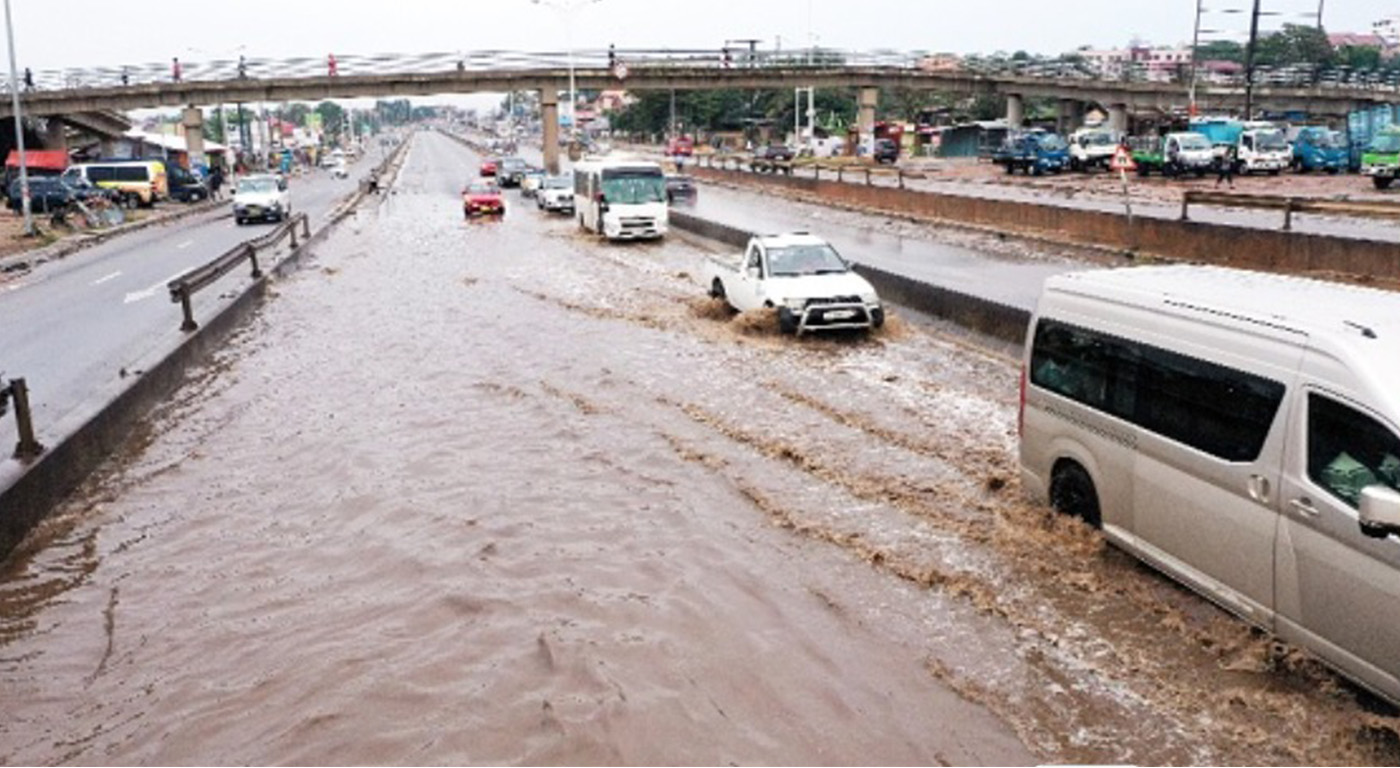

The Ghana Institution of Engineering (GhIE) has called for an urgent overhaul of Ghana’s stormwater management policies, warning that the country’s current drainage systems are no longer capable of addressing the realities of rapid urbanisation, climate variability, and increasing flood risks.
The call follows growing evidence that conventional drainage infrastructure, designed primarily to move stormwater downstream as quickly as possible, has become inadequate for modern urban environments, particularly in Accra and other rapidly expanding metropolitan areas.
According to a policy brief presented by the Institution, [i] Ghana’s cities can no longer rely on traditional centralized, conveyance-based drainage systems. Rapid urban expansion, widespread paving of land surfaces, poor waste management practices, and increasing rainfall intensity have significantly exceeded the capacity of existing drainage networks.
“Flooding in Accra is no longer simply a seasonal occurrence. It is increasingly becoming a structural challenge driven by rapid urbanisation, loss of natural infiltration areas, and fragmented management systems,” the policy brief notes.
The Institution observed that flooding incidents have become more frequent and severe over the past decade, occurring even during periods of relatively low rainfall. This suggests that the problem extends beyond climate change and reflects deeper weaknesses within existing stormwater management systems.
The Institution highlighted that many drains have effectively become conduits for solid waste, reducing hydraulic capacity and compromising their intended function. The policy brief also noted that hydraulic constraints within the Odaw-Korle drainage system continue to contribute to recurring flood events across parts of the capital.
The document further identifies institutional fragmentation as a major obstacle to effective flood management. Responsibilities are spread across multiple agencies, while administrative boundaries often do not align with natural drainage basins, making coordinated catchment-wide planning difficult.
To address these challenges, GhIE is advocating a transition towards decentralized, nature-based stormwater management systems that mimic natural hydrological processes. Recommended interventions include permeable pavements, bioswales, rain gardens, green roofs, detention systems, infiltration facilities, riparian buffers, and rainwater harvesting.
The Institution is also calling for a National Post-Development Runoff Control Policy to ensure that new developments do not generate runoff volumes and peak flows beyond pre-development conditions. In addition, GhIE recommends a National Rainwater Harvesting Policy, stronger enforcement of land-use regulations, catchment-based planning units, protection of waterway buffer zones, and greater private-sector participation in green infrastructure development.
According to GhIE, adopting these measures could significantly reduce flood frequency and severity, improve water quality, lower long-term infrastructure costs, create green jobs, and strengthen Ghana’s resilience to climate change.
“The evidence is clear,” the report concludes. “Ghana must shift from downstream, conveyance-based engineering to upstream, decentralized, nature-mimicking stormwater management. The time for policy reform is now.”
The recommendations align with the best global practices in sustainable urban drainage and support the achievement of the United Nations Sustainable Development Goals, particularly SDG 6 (Clean Water and Sanitation) and SDG 11 (Sustainable Cities and Communities).
I agree with the call by GhIE for interrogating and reviewing our current design of roads and associated drainage systems. The current design, though acceptable, is at variance with our behavioural, cultural and societal norms. These behaviours affect the efficiency and effectiveness of the current design including, but not limited to the following:
1. Disposal of waste in drains by people.
2. Stealing of metal drain covers( by some scrap dealers) that are meant to prevent plastics and other debris from entering the underground drains along the roads.
3. Our inability to clean the roads regularly to prevent the metal gratings from clogging (even if they are in place).
4. The size of drains may also need to be re-visited.
5. Authorising buildings in waterways without any penalties to the culprits.
6. General breakdown in law enforcement and holding people accountable for breaking
rules, regulations, laws and bylaws of municipal assemblies, among others.
The net result is that, the road becomes the drain whenever it rains heavily!
The total package of all listed above needs to be addressed at the same time if we are to make any headway. These are my personal views and I stand for correction.
Hi,
I feel vindicated hearing your group advocate rainwater harvesting to mitigate the flooding issues in the country. I have personally employed this solution, albeit in an enhanced form.
This initiative to find solution to flooding in Ghana is a very important. This has led to homeless people, loss of lives and properties.
The introduction of rainwater harvesting will help resolve the power outage in the nation. If reservoir tanks are designed to accommodate stormwater, there will be enough water to support Akosombo Dam in case of any shortage intend minimize run off through cities in the nation.
Also, the drainage systems must be considered, we need to widen the drains since the infrastructures are increasing daily.