
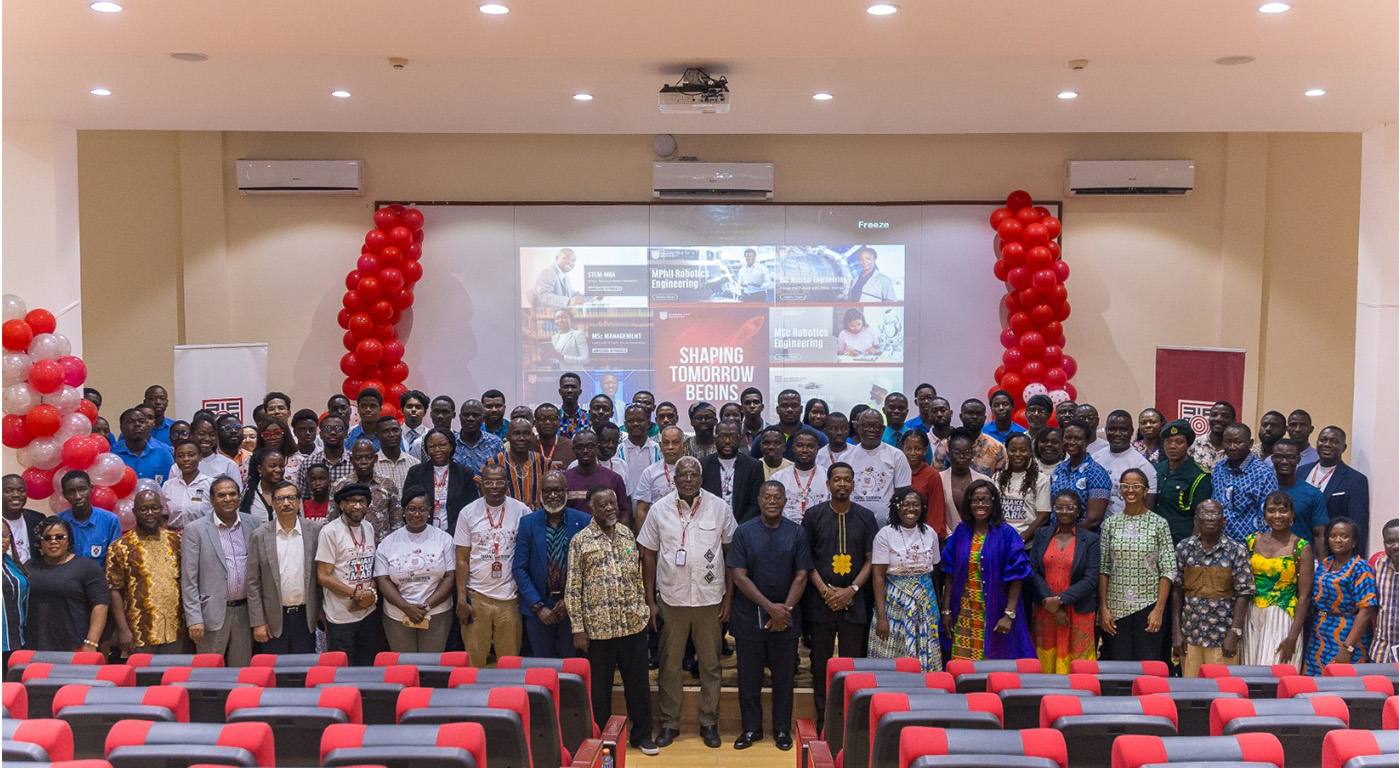

The Ghana Institution of Engineering (GhIE) has commended Academic City University for launching a new set of undergraduate and graduate programmes aimed at preparing students for emerging opportunities in engineering, technology, innovation, and industry.
The programmes were launched in Accra on May 8, 2026, under the theme “Shaping Tomorrow – Programme Launch 2026: Bold Programmes. Designed for Impact,” which brought together stakeholders from academia, engineering, industry, and the wider professional community.
The newly introduced undergraduate programmes include BSc Unmanned Aerial Systems Engineering, BSc Data Science and Artificial Intelligence, and BSc Nuclear Engineering, while the graduate programmes include the STEM MBA and MSc Management.
Speaking during the launch, the Director for Professional Practice at the Ghana Institution of Engineering, Ing Leonora Otu-Boateng, commended the university for introducing programmes that align with global technological trends and future workforce demands.
She said industries across the world were increasingly being shaped by artificial intelligence, automation, robotics, clean energy systems, and advanced engineering technologies, making it necessary for Ghana to prepare young people for future opportunities.
Ing Otu-Boateng noted that engineering was fundamentally about developing practical solutions that improve lives, strengthen economies, and support sustainable development.
Former President of the Ghana Institution of Engineering and former Chairman of the Engineering Council, Ing Dr. Kwame Boakye, stressed the critical role of engineering in national development and industrial transformation.
He said Africa’s natural resources alone would not guarantee development unless countries deliberately invested in engineering education, innovation, and leadership.
According to him, engineering remains central to infrastructure development, industrialisation, and practical problem-solving capable of transforming economies and improving lives.
Ing Dr. Boakye encouraged young people to see engineering not only as a profession but also as an important pathway to leadership, innovation, and nation-building.
President and Provost of Academic City University, Ing Prof. Fred McBagonluri, said the programmes were developed to respond to Ghana’s evolving technological, industrial, and economic needs. He noted that universities must increasingly align academic programmes with industry demands and national development priorities.
He stated that the university’s research identified artificial intelligence, robotics, biomedical sciences, advanced manufacturing, and data systems as some of the key areas shaping the future of work and industry globally.
Prof. McBagonluri explained that the new programmes in unmanned aerial systems engineering, data science and artificial intelligence, and nuclear engineering were designed to prepare students for emerging opportunities in technology, healthcare, energy, logistics, agriculture, and industrial development.
As part of the programme launch, guests toured an exhibition featuring innovative student projects focused on solving practical societal challenges through technology and engineering. The projects included applications designed to preserve historical artefacts digitally and an emergency response system integrating voice recognition and hand gesture communication technology to assist vulnerable
This is really going to shape the face of the industry.
Please Narrow it down to the students chapters in other universities
Thank you