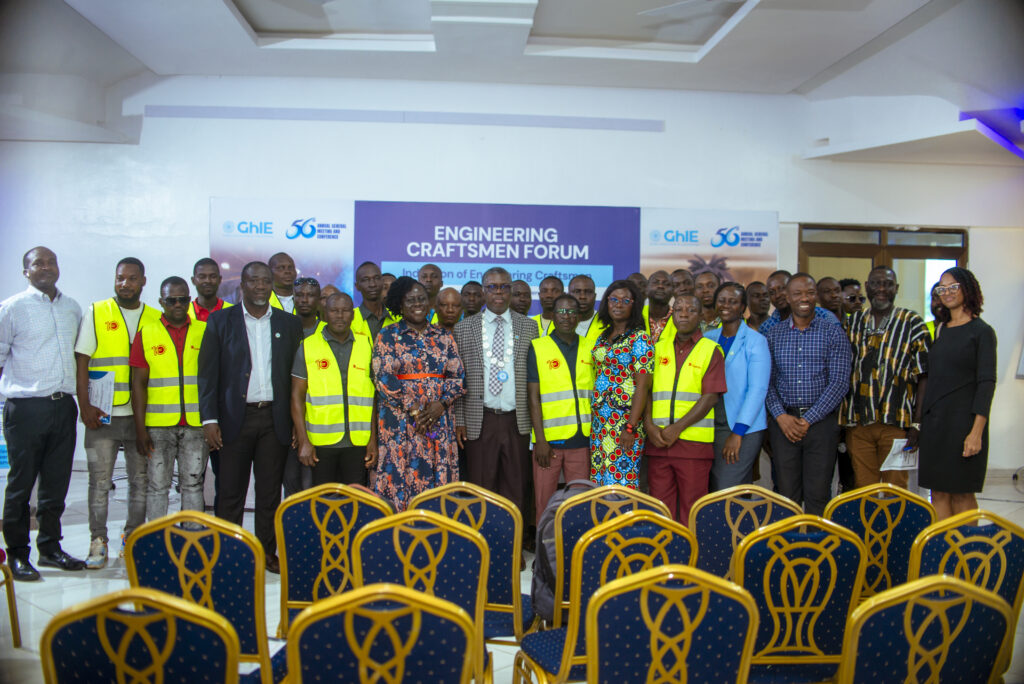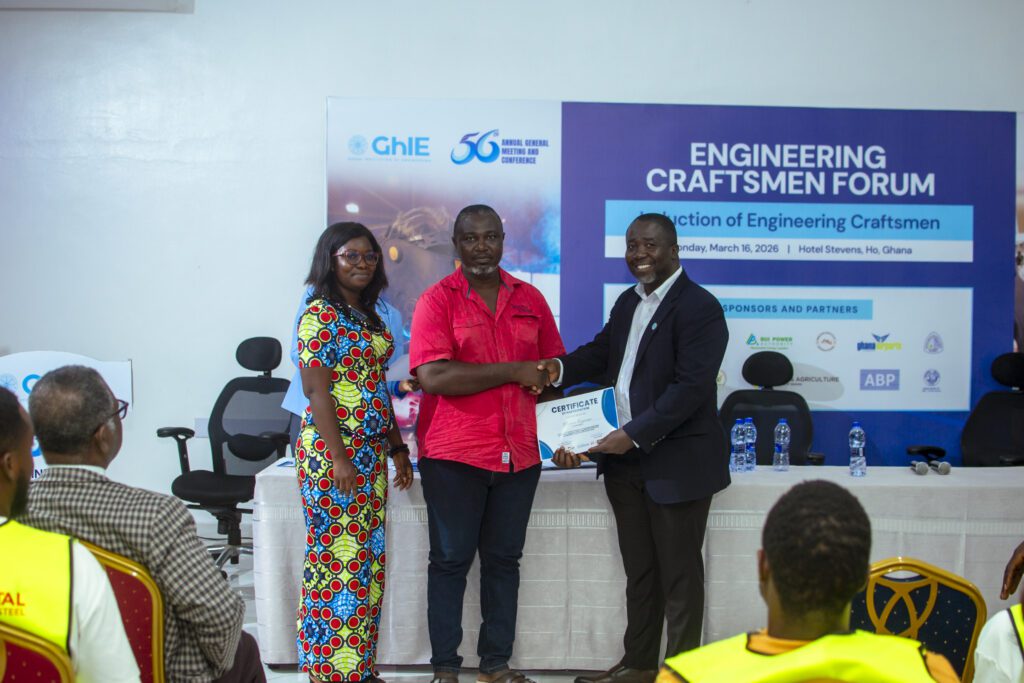

Thirty-five engineering practitioners have been inducted into the class of Engineering Craftsmen by the Ghana Institution of Engineering (GhIE), marking an important step toward strengthening Ghana’s technical workforce and promoting higher professional standards in the engineering sector.
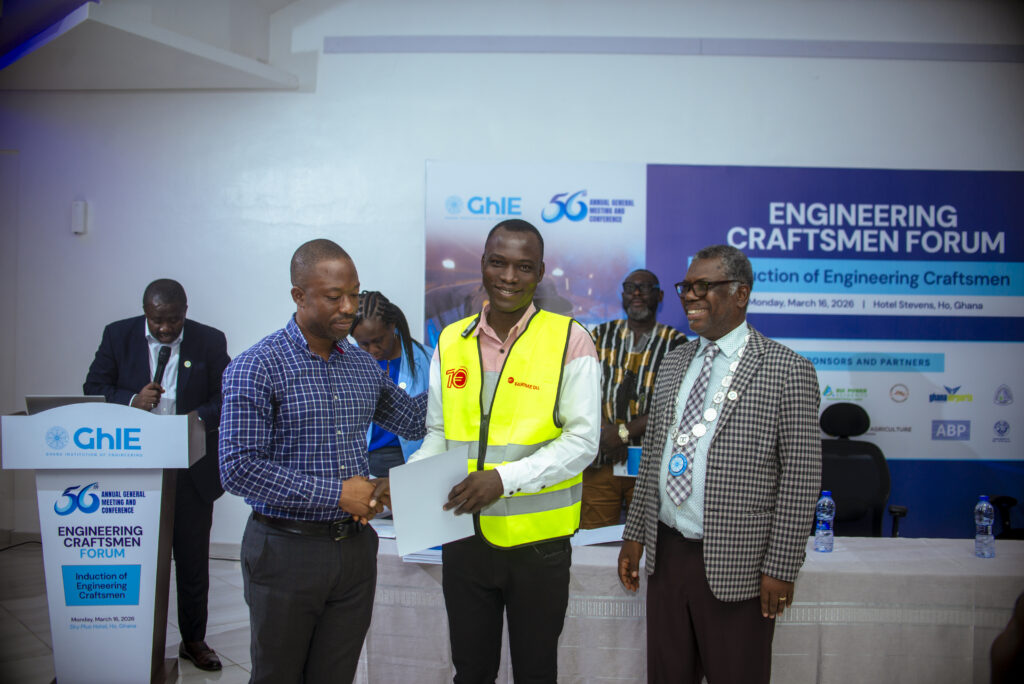
The induction ceremony, held on March 16, 2026, in Ho as part of the Institution’s 56th Annual General Meeting and Engineering Conference, formally recognized the candidates for meeting the academic and practical requirements for membership within the Engineering Craftsmen Occupational Group.
The initiative reflects GhIE’s ongoing commitment to creating professional pathways for skilled artisans and integrating technical trades into Ghana’s broader engineering ecosystem.
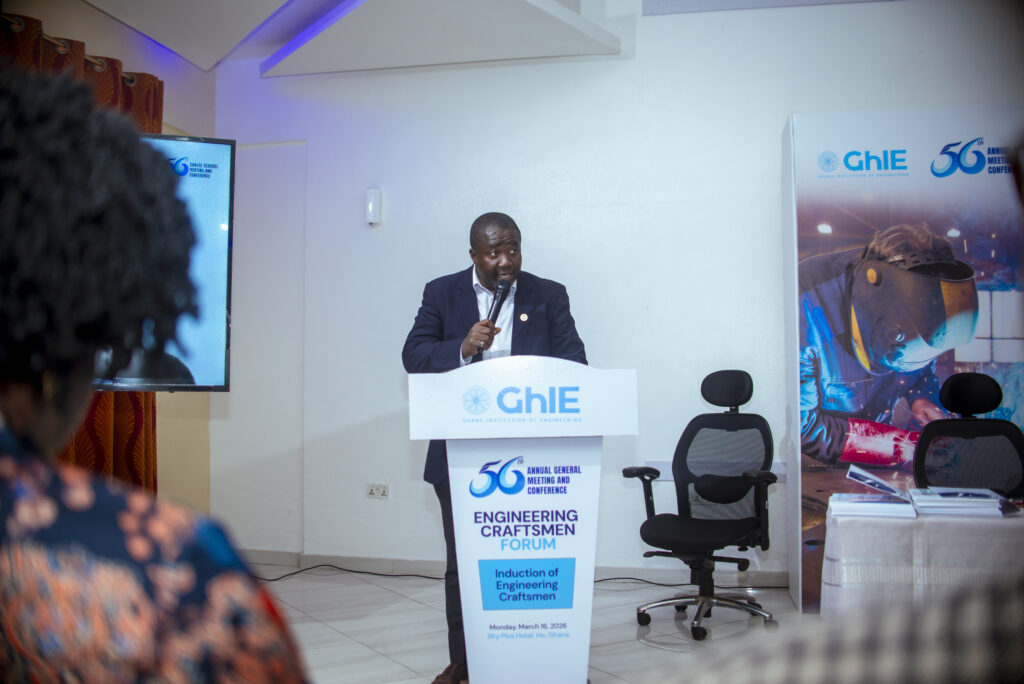
Speaking at the ceremony, GhIE President Ing Ludwig Annang Hesse urged the newly inducted craftsmen to prioritize health and safety in their work while embracing innovation and continuous learning.
He encouraged them to adopt modern approaches to engineering practice and remain open to new techniques and technologies. “Innovation is not only found in classrooms or design offices,” he noted. “It also lies in the hands of craftsmen who transform engineering ideas into reality.”
The Chairperson of the GhIE Membership Committee, Ing Dr. Michael Ankamah Bekoe, explained that the Institution’s Constitution, in accordance with the Engineering Council Act, 2011 (Act 819), recognizes four occupational groups within the engineering profession: Professional Engineers, Professional Engineering Technologists, Engineering Technicians, and Engineering Craftsmen.
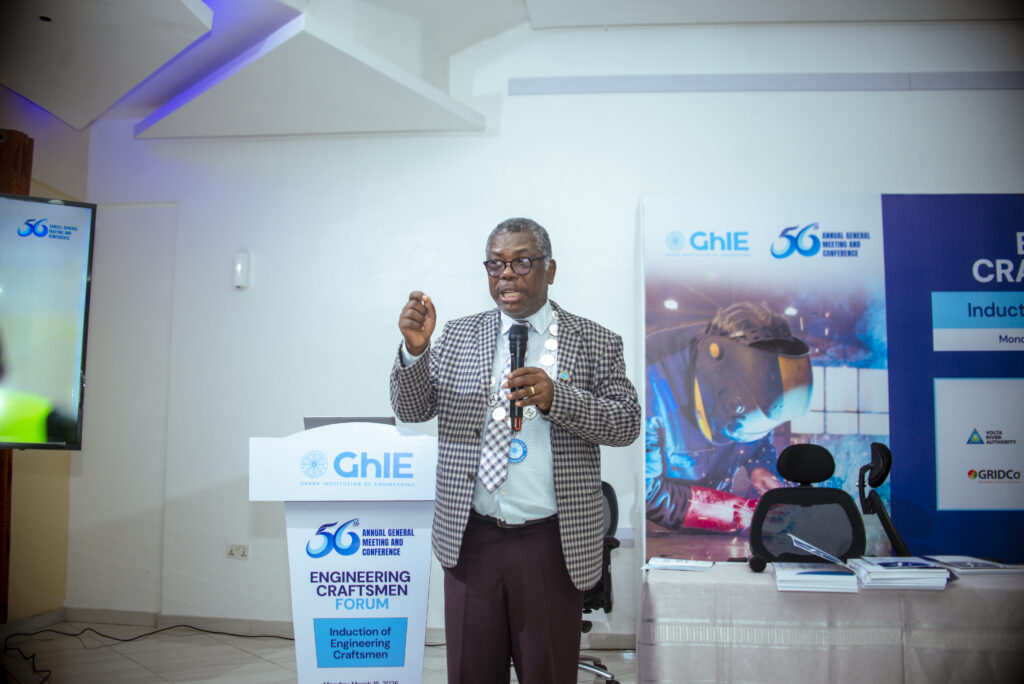
Within the Engineering Craftsmen group, membership is structured into three levels Master Engineering Craftsmen, Engineering Craftsmen, and Trainee Engineering Craftsmen to reflect different stages of competence and professional responsibility.
He noted that admission into the Engineering Craftsmen class requires candidates to possess an accredited Proficiency II Certificate in an engineering trade or an equivalent qualification, in addition to at least four years of relevant practical training, including a minimum of one year of post-qualification experience involving responsibility in engineering craftsmanship.
The 35 inductees were trained under the ProfArts Project, an initiative between the Ghana Institution of Engineering and the German Development Cooperation (GIZ) that aims to strengthen technical and vocational skills development within the engineering sector. The collaboration supports the professional recognition of skilled artisans and contributes to improving standards of workmanship across the industry.
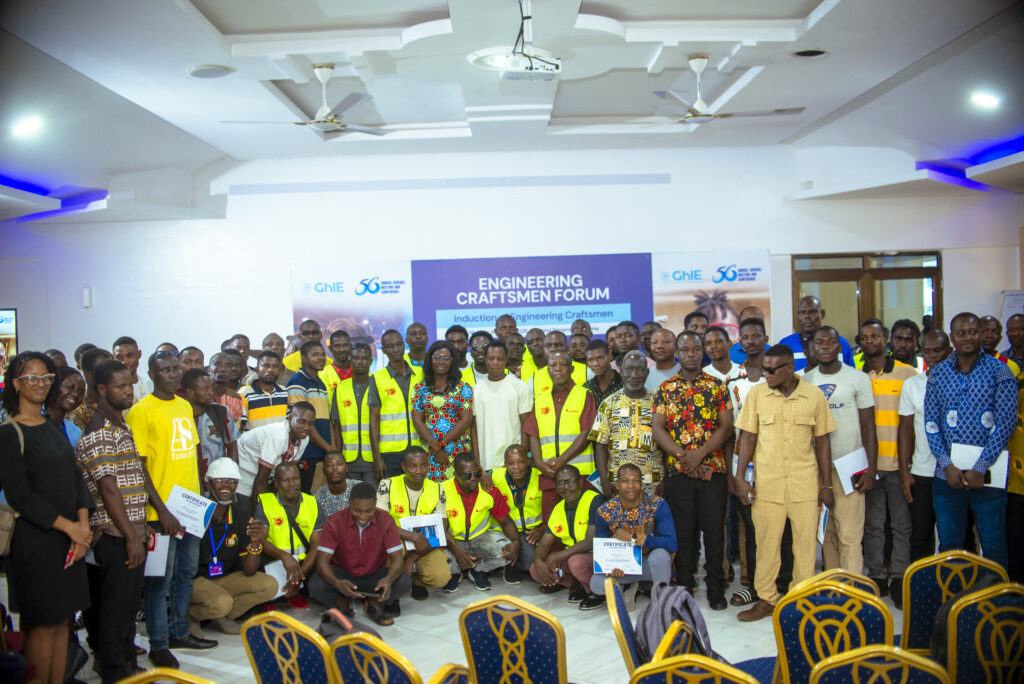
The inductees were carefully assessed by the Institution’s Membership Committee to ensure they met the academic and professional experience requirements stipulated by the Constitution and Byelaws of GhIE.
The group represents a wide range of technical disciplines, with nine (9) members from the Civil Technical Division, seven (7) from the Mechanical and Agricultural Technical Division, and nineteen (19) from the Electrical and Electronic Technical Division.
The ceremony concluded with the formal presentation of the candidates, after which they were expected to take the Engineering Oath, affirming their commitment to uphold the values, ethics, and professional standards of the Institution.