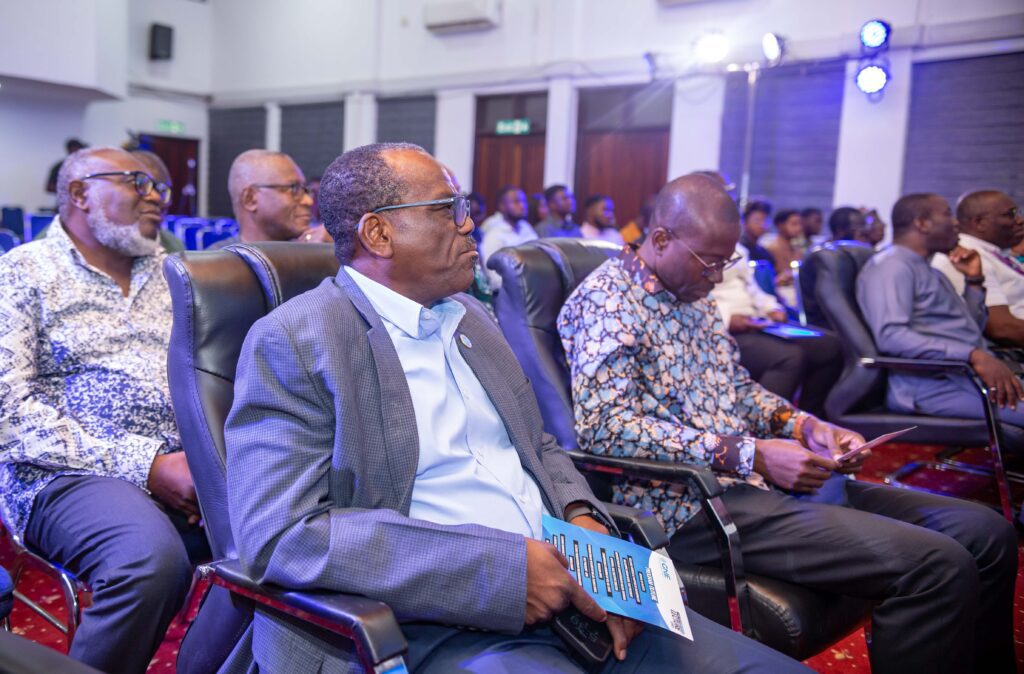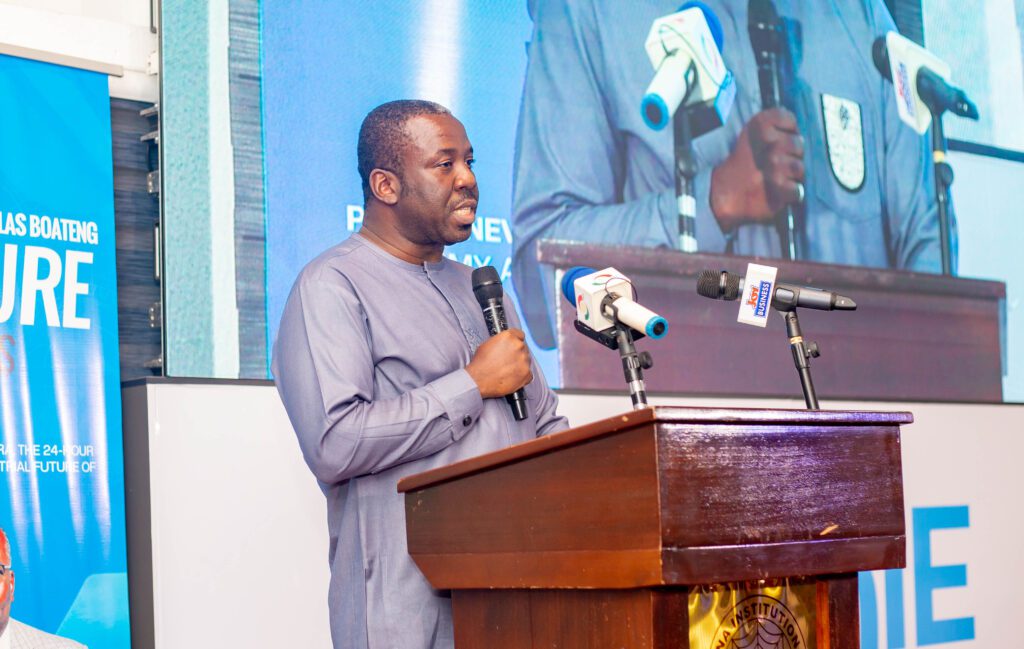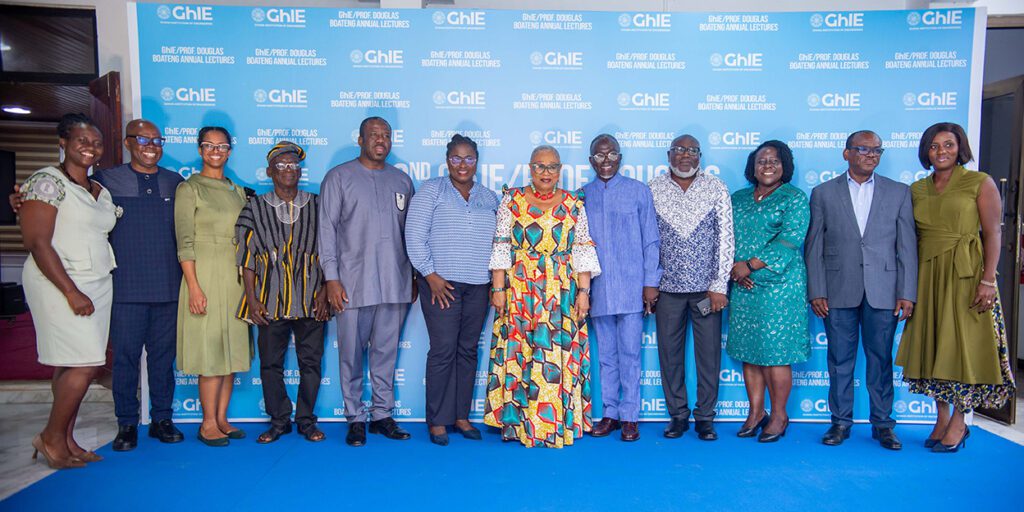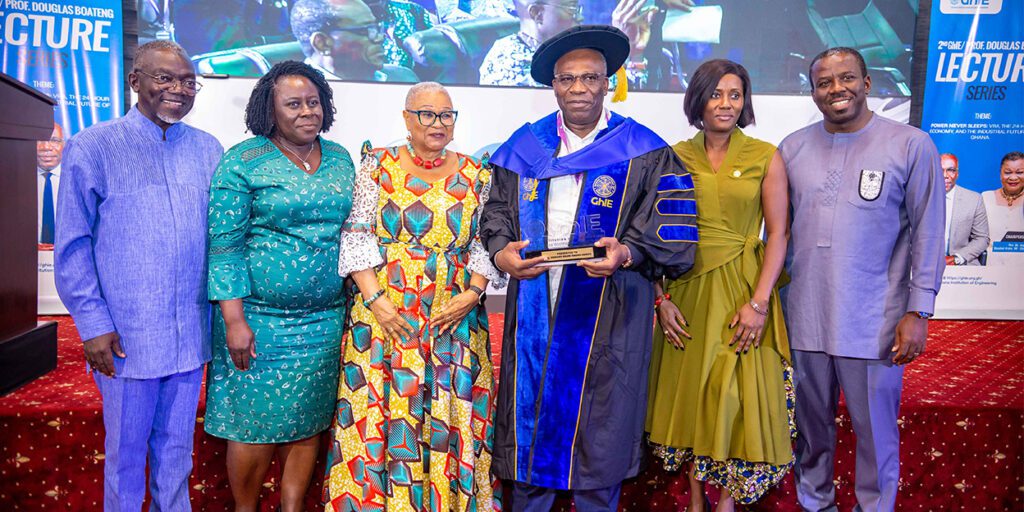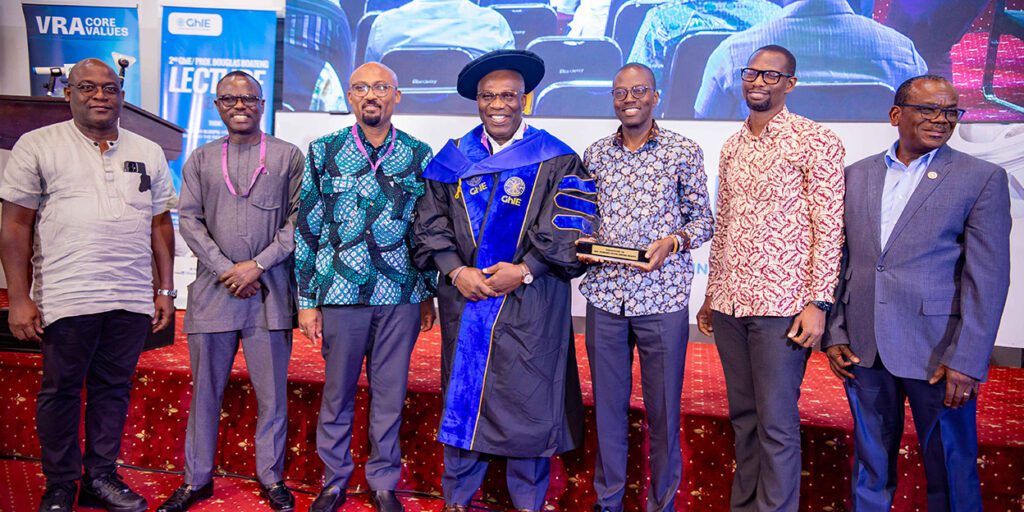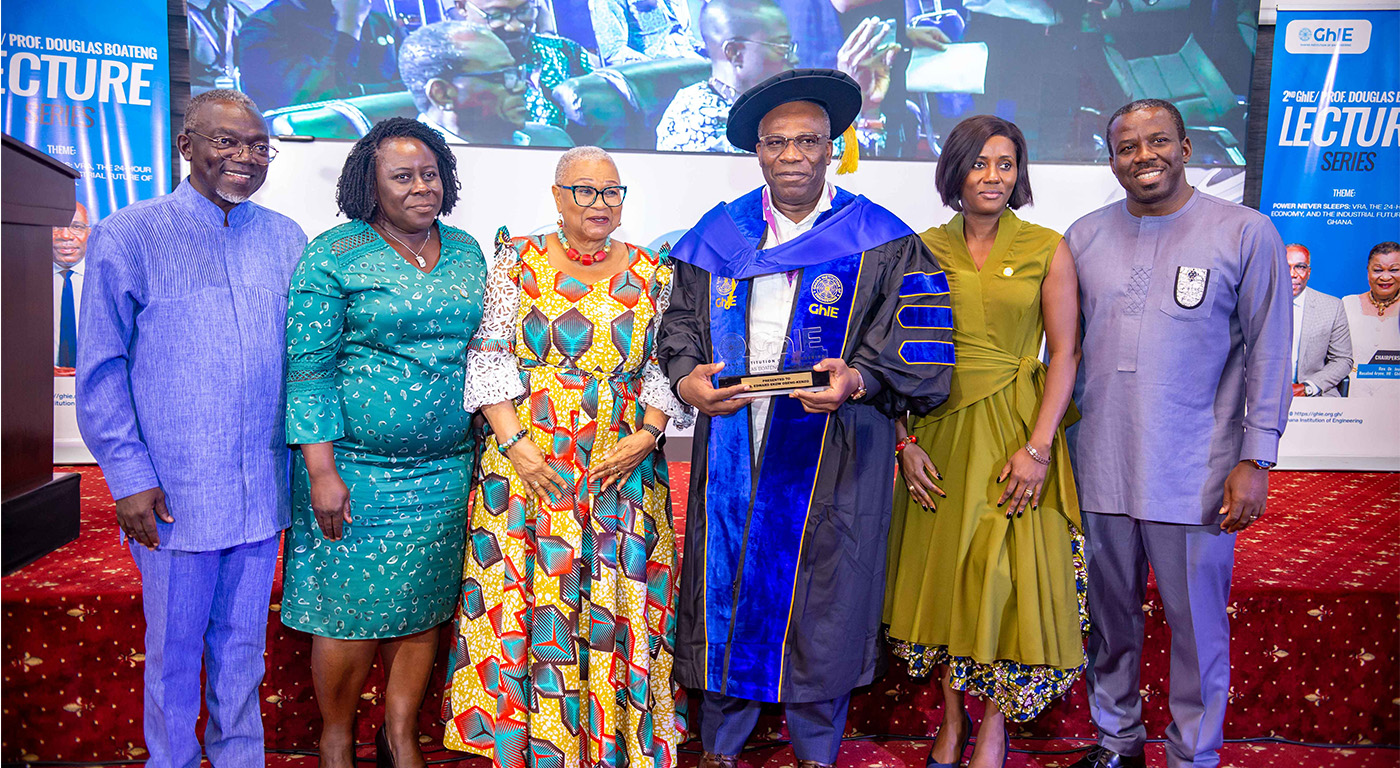
Accra, Ghana – Reliable, affordable and sustainable electricity will be the cornerstone of Ghana’s 24-Hour Economy and industrial transformation agenda, Chief Executive of the Volta River Authority (VRA), Edward E. Obeng-Kenzo, has said.
Delivering the keynote address at the 2nd GhIE–Professor Douglas Boateng Lecture Series, Mr Obeng-Kenzo stressed that no nation could sustain a productive 24-hour economy without a dependable power supply.
“The success of the 24-hour economy will be determined largely by the reliability, affordability and availability of power,” he told participants at the lecture, held under the theme “Power Never Sleeps: VRA, the 24-Hour Economy and the Industrial Future of Ghana.”
He described the Government’s 24-Hour Economy and Accelerated Export Development Programme as a bold national strategy with the potential to transform Ghana into a globally competitive industrial and export-driven economy. However, he emphasised that achieving this vision would require sustained investment in energy infrastructure capable of supporting round-the-clock economic activity.
Reflecting on VRA’s contribution to Ghana’s development over the past six decades, Mr Obeng-Kenzo said the Authority had evolved from hydroelectric generation at Akosombo and Kpong into a diversified power utility with hydro, thermal and renewable energy assets. Today, VRA has an installed generation capacity of approximately 2,547 megawatts, supplying electricity to homes, businesses and industries across Ghana and the West African sub-region.
He noted that VRA continues to invest in renewable energy, modernise its generation facilities and deploy smart technologies to build a cleaner, more resilient and efficient power system that meets the demands of a growing economy.
While acknowledging Ghana’s significant progress in expanding electricity access, the VRA Chief Executive said continued investment in grid modernisation, battery storage technologies, digital monitoring systems and other critical energy infrastructure would be essential to ensuring long-term energy security and industrial competitiveness.
According to him, the energy sector has evolved beyond its traditional role as a public utility to become a key enabler of industrialisation, investment, job creation and economic growth.
Reaffirming VRA’s commitment to Ghana’s development, Mr Obeng-Kenzo concluded:
“Just as the Volta River continues to flow day and night, season after season, so too must our commitment to powering Ghana’s development remain unwavering. People may rest, but progress cannot sleep; neither can power.”
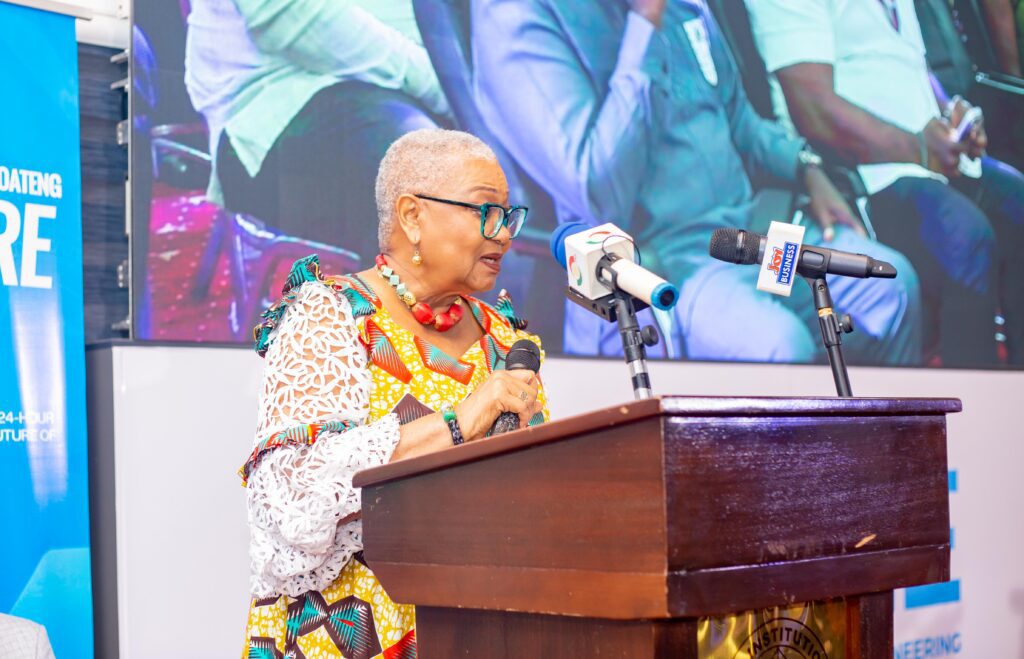
In a welcome address delivered on behalf of the President of the Ghana Institution of Engineering, Ing Ludwig Annang Hesse, by the Executive Director, Ing Dr Enyonam Kpekpena, the Institution said this year’s lecture sought to examine how VRA’s experience, infrastructure and strategic leadership could support Ghana’s transition to a productive 24-hour economy and a more competitive industrial future.
The address noted that the lecture series also provides a platform to explore the investments, policies, technologies and engineering leadership required to build an energy sector that is reliable, sustainable and responsive to Ghana’s evolving development needs.
The annual GhIE–Professor Douglas Boateng Lecture Series continues to serve as a premier platform for dialogue among engineers, policymakers, industry leaders and academia, fostering innovative engineering solutions and strategic partnerships that advance infrastructure development, industrialisation and sustainable national growth.