
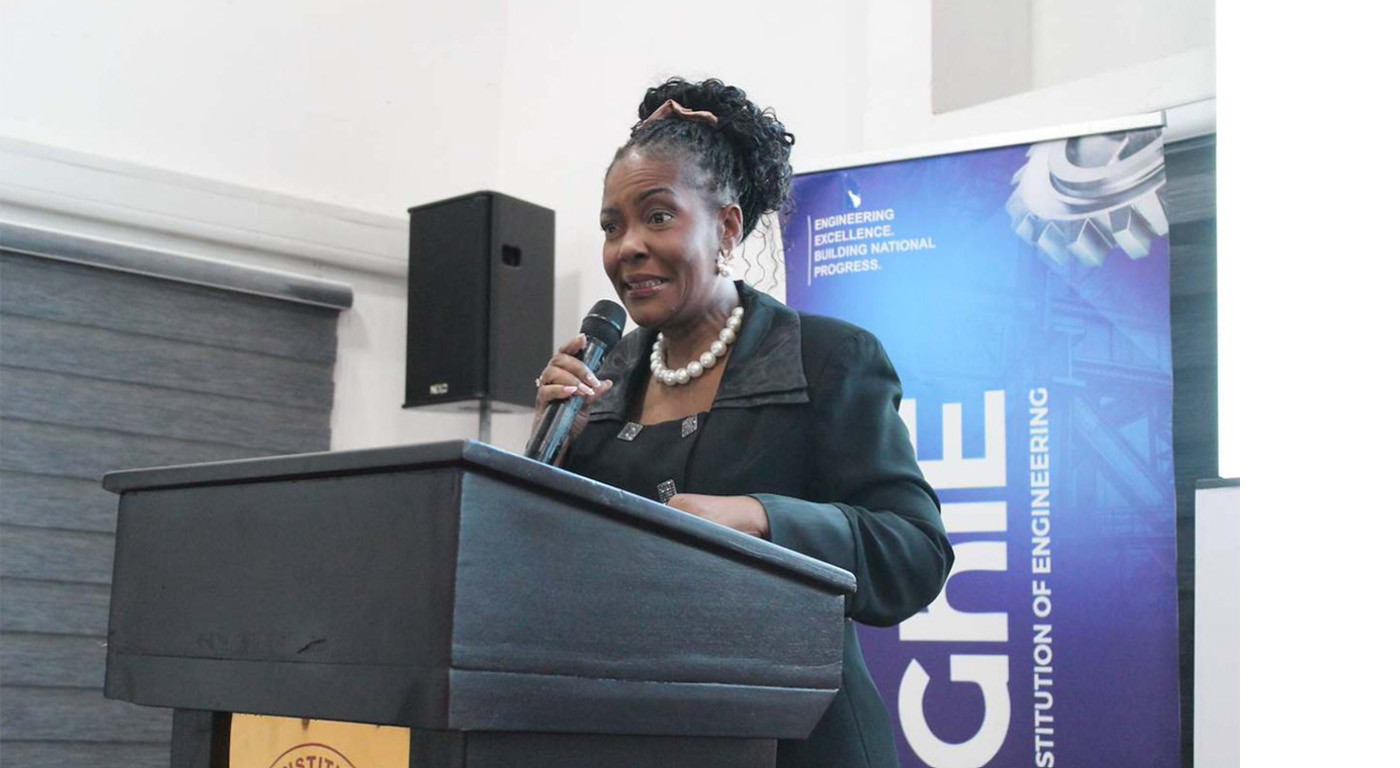
President of the Ghana Bar Association (GBA), Mrs Efua Ghartey, has challenged Ghanaian professionals to make integrity, personal accountability and ethical leadership central to their work, warning that professional expertise alone cannot guarantee national progress.
She said professionals had a responsibility to uphold ethical standards even where laws and regulations could not compel them to do so.
Mrs Ghartey made the call on Thursday when she chaired the Ghana Institution of Engineering’s (GhIE) Annual Ethics Lecture at the Engineering Centre in Accra.
The lecture, which brought together engineering professionals and other stakeholders, focused on the engineer’s responsibility to protect the public interest through ethical practice, sustainability and responsible infrastructure delivery.
Expressing admiration for the engineering profession, Mrs Ghartey said her interactions with women engineers had reinforced her appreciation for the combination of professional excellence, discipline and faith that could guide ethical conduct.
She stressed that Ghana needed professionals who would translate their expertise into meaningful contributions to society, particularly in an environment where concerns about ethical standards and accountability continued to feature in national discussions.
Drawing on biblical references, she urged professionals to serve as “lights” in society, citing Philippians 2:15, which calls on believers to shine in a crooked and perverse generation.
She also invoked the biblical image of salt, asking whether professionals were making a sufficient difference in preserving the values necessary for national development.
“All is not lost. We have to straighten what is broken,” she said, describing the ethics lecture as timely and necessary.
Mrs Ghartey said ethical responsibility extended beyond compliance with the law, noting that individuals must sometimes make the right decisions without external enforcement or the threat of punishment.
She cited a statement attributed in her remarks to Edmund Burke, which distinguished between conduct regulated by law, personal choice and a third domain in which people do what is right because of their own conscience.
That responsibility, she said, was particularly important for professionals whose decisions could affect public safety, institutional trust and the country’s development.
She also highlighted the relationship between integrity and economic activity, sharing a quotation that described trust as a longstanding foundation of business and warned that prosperity without ethics remained fragile.
Mrs Ghartey urged participants to apply the lessons from the lecture in their respective professions rather than allow the discussions to end with the event.
She commended GhIE for sustaining the Annual Ethics Lecture, now in its 11th year, and encouraged members to remain committed to promoting professional standards and responsible conduct.
The event reinforced the need for collaboration across professions in strengthening public accountability and ensuring that technical competence is matched by ethical responsibility.
Mrs Ghartey called on participants to carry the message into their workplaces and institutions, expressing hope that their actions would contribute to a more ethical professional culture in Ghana.
She said the country’s progress would depend not only on what its professionals knew, but also on the principles they were prepared to uphold.