GhIE President Calls for Engineering-Led Reset to Drive Food Security and Economic Transformation
18Mar’26
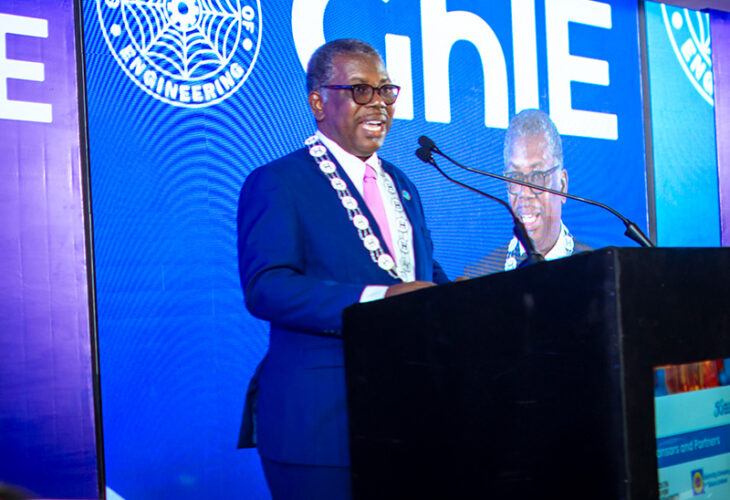
The President of the Ghana Institution of Engineering (GhIE), Ing Ludwig Annang Hesse, has called for a fundamental reset in Ghana’s development approach, urging that engineering, science, and technology be placed at the center of efforts to achieve food security and sustainable economic growth.
Delivering his welcome address at the opening of the Institution’s 56th Annual General Meeting and Engineering Conference in Ho, Ing. Hesse noted that Ghana’s persistent development challenges stem largely from the limited integration of engineering solutions into national planning and implementation.
Addressing policymakers, industry leaders, traditional authorities, and international delegates, he observed that despite decades of policy interventions in agriculture and economic development, outcomes remain constrained. He cited high youth unemployment, low agricultural productivity, inadequate storage systems, and continued reliance on rain-fed farming as indicators of systemic inefficiencies.
Ing. Hesse emphasized that the conference theme, “Engineering the Food Security and Sustainable Agriculture Value Chain,” offers a critical opportunity to rethink and redesign Ghana’s agricultural systems. He called for a comprehensive application of engineering across the value chain from irrigation and mechanized production to processing, storage, transportation, and market access.
Drawing on global experience, he highlighted how countries such as South Korea, Singapore, and Malaysia have leveraged engineering and technology to drive rapid economic transformation. While these countries had comparable economic conditions to Ghana in the 1960s, he noted that sustained investment in engineering capacity and industrial systems has significantly improved their development outcomes.
He stressed that Ghana’s challenge is not only technical but also institutional, calling for stronger ethical standards, accountability, and a renewed commitment to national development. Engineering, he said, must extend beyond technical execution to include leadership in governance, innovation, and systems thinking.
Ing. Hesse further urged engineers to play a more active role in national development by shaping policy, mentoring emerging professionals, and upholding high standards of professionalism and integrity. He emphasized that quality, safety, and sustainability must remain central to engineering practice.
The President acknowledged the support of government, development partners, and sponsors, as well as collaboration with key institutions, including the Ministry of Works, Housing and Water Resources and the Ministry of Food and Agriculture.
He encouraged participants to actively engage in technical sessions, exhibitions, and innovation showcases, describing them as essential platforms for collaboration and solution-building.
The conference has brought together stakeholders from across Ghana and beyond to explore strategies for strengthening food systems and advancing sustainable agricultural value chains through engineering innovation. Ing. Hesse concluded by reaffirming that engineering remains central to Ghana’s long-term development and transformation.